Best Statement of Values (SOV) Extraction Software in 2026
Three tools that turn statements of values into clean exposure data compared: Indico Data, SortSpoke and Roots, by approach, security and who each fits.
TL;DR
- Statements of values arrive as spreadsheets, PDFs and scans with inconsistent columns, merged cells and location rows spread across tabs, so SOV ingestion is still mostly manual.
- Indico Data leads for large carriers ingesting SOVs at volume, with a published customer case on SOV and loss run ingestion.
- SortSpoke fits specialty underwriting teams that want SOVs extracted with human validation; Roots reads SOVs and property schedules as part of agent-driven intake.
- None of the three publishes pricing.
- Normalize construction, occupancy and protection codes to your own schema; extraction alone does not make SOV data model-ready.



A statement of values lists every location an insured wants covered, with its values, construction and occupancy. Underwriters and cat modelers need that data clean and coded, but SOVs arrive as broker spreadsheets with renamed columns, merged cells and multiple tabs, or as PDFs and scans. This guide covers the three tools whose own materials describe SOV extraction as a core capability.
The 3 best SOV extraction tools
1. Indico Data: Best for high-volume SOV ingestion at large carriers
 Quote onlyFull profile →
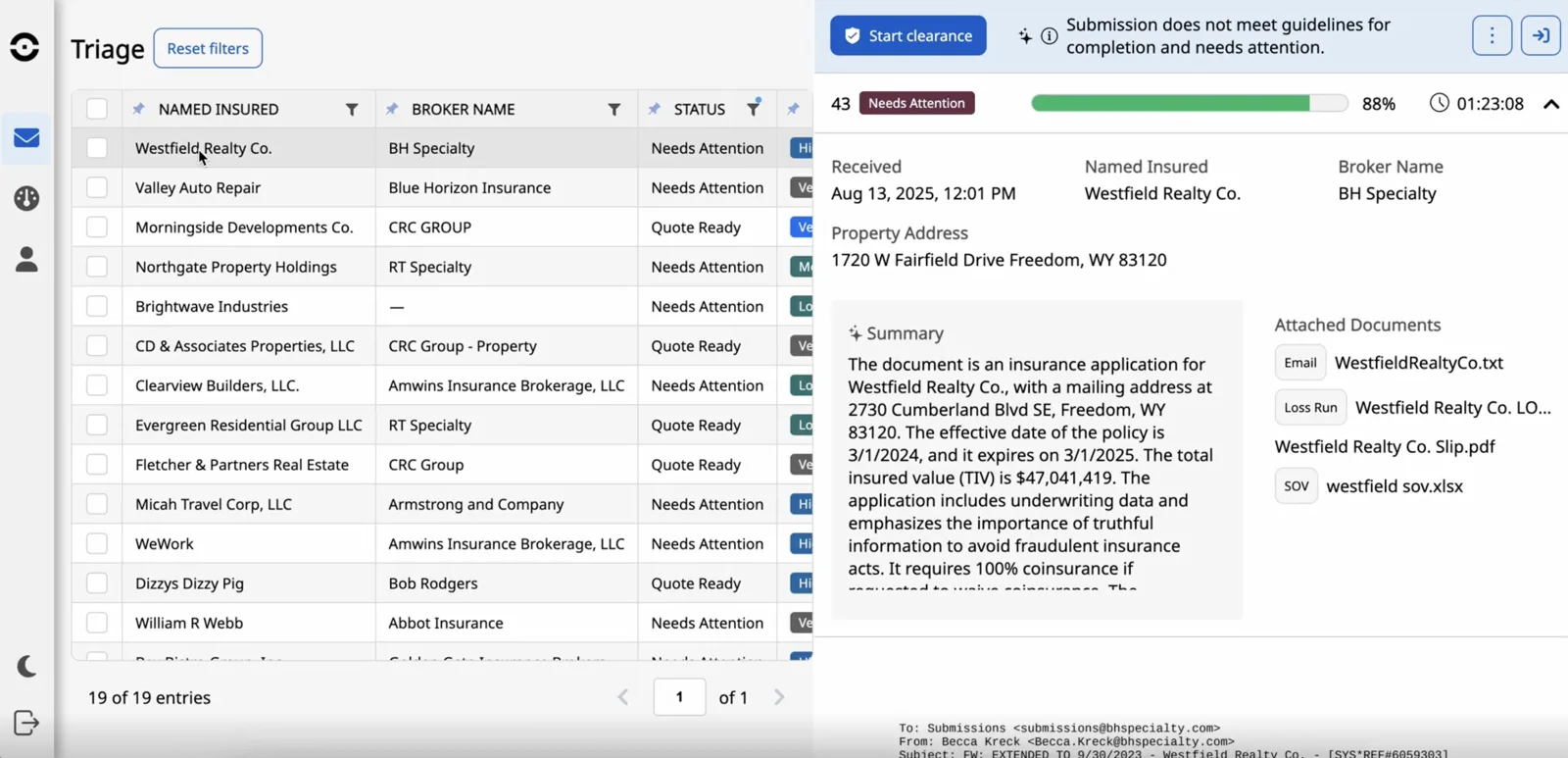
Best for: Large carriers and specialty MGAs that receive many SOVs alongside loss runs and ACORDs and want them unbundled and routed.
Indico Data highlights SOV and loss run processing time on its homepage, and says Convex cut manual review time to seconds while streamlining SOV and loss run ingestion and routing. These are the company’s statements. (source)
Key functionalities
- Extraction agents that unbundle submissions, including SOV spreadsheets
- Routing of extracted exposure data to underwriting
- Review workflows for low-confidence values
Pros:
- SOV processing is a headline use case
- Published customer case on SOV and loss run ingestion (Convex)
- Handles SOVs inside full submission unbundling
Cons:
- Enterprise sales and implementation
- Pricing not published
Pricing: Not published; quoted by sales.
Verdict: The strongest choice when SOV volume is high and part of a wider submission intake program.
2. SortSpoke: Best for human-validated SOVs in specialty underwriting
 Quote only · SOC 2 Type IIFull profile →
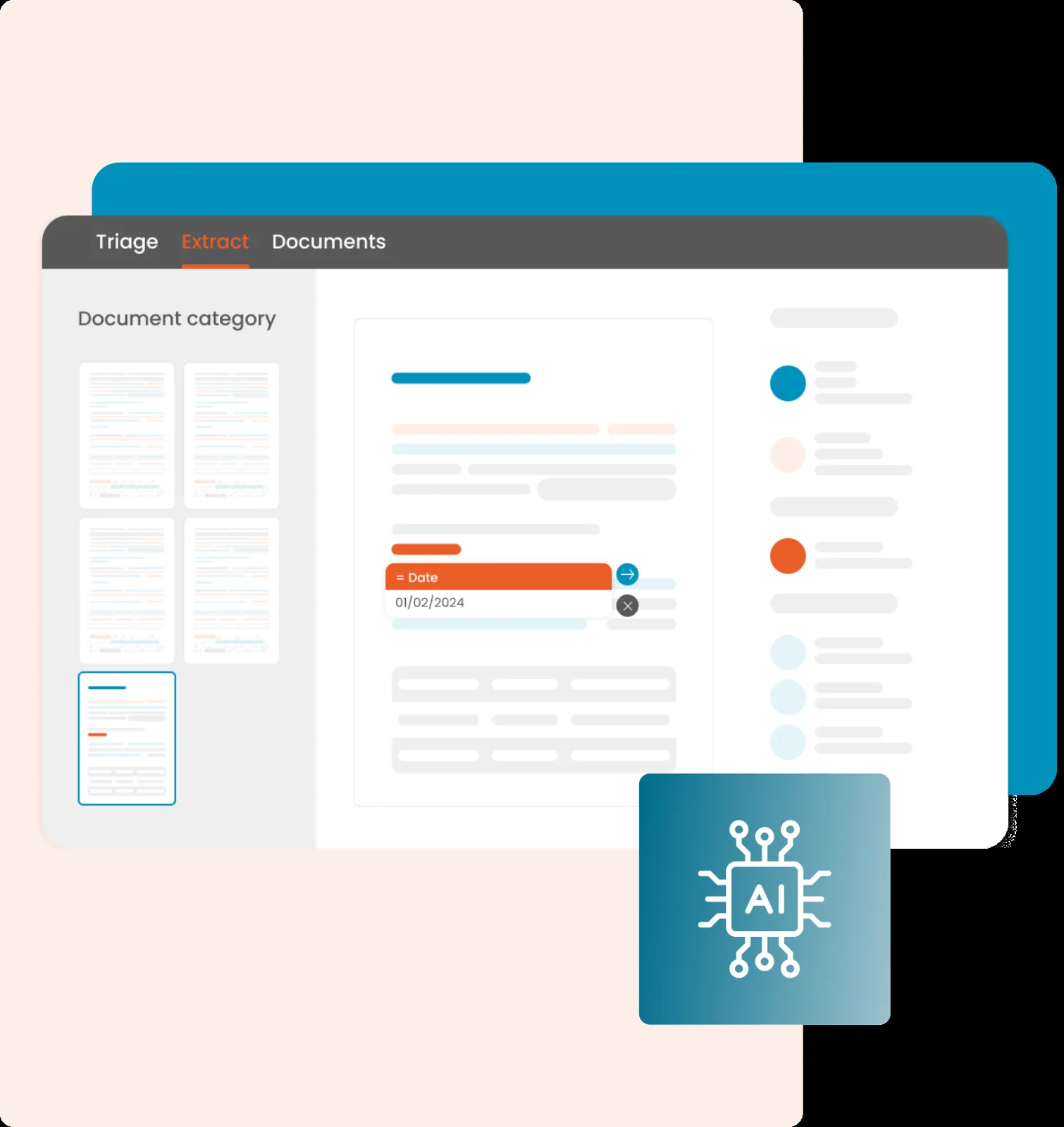
Best for: E&S and specialty underwriting teams that want SOV data verified by people before pricing.
SortSpoke lists SOVs among the documents its insurance-trained extraction handles, alongside ACORD forms and loss runs, with human validation on uncertain fields. (source)
Key functionalities
- SOV, ACORD and loss run extraction
- Underwriter-facing configuration and validation
- Human-in-the-loop review
Pros:
- Trained on insurance documents including SOVs
- Human validation built in
- SOC 2 Type 2 and HIPAA-compliant infrastructure
Cons:
- Focused on submission intake
- Pricing not published
Pricing: Not published; quoted by sales.
Verdict: A good fit when underwriters want to check every location before it reaches the rating model.
3. Roots Automation: Best for normalized exposure data from any SOV format
 Quote only · SOC 2 Type IIFull profile →
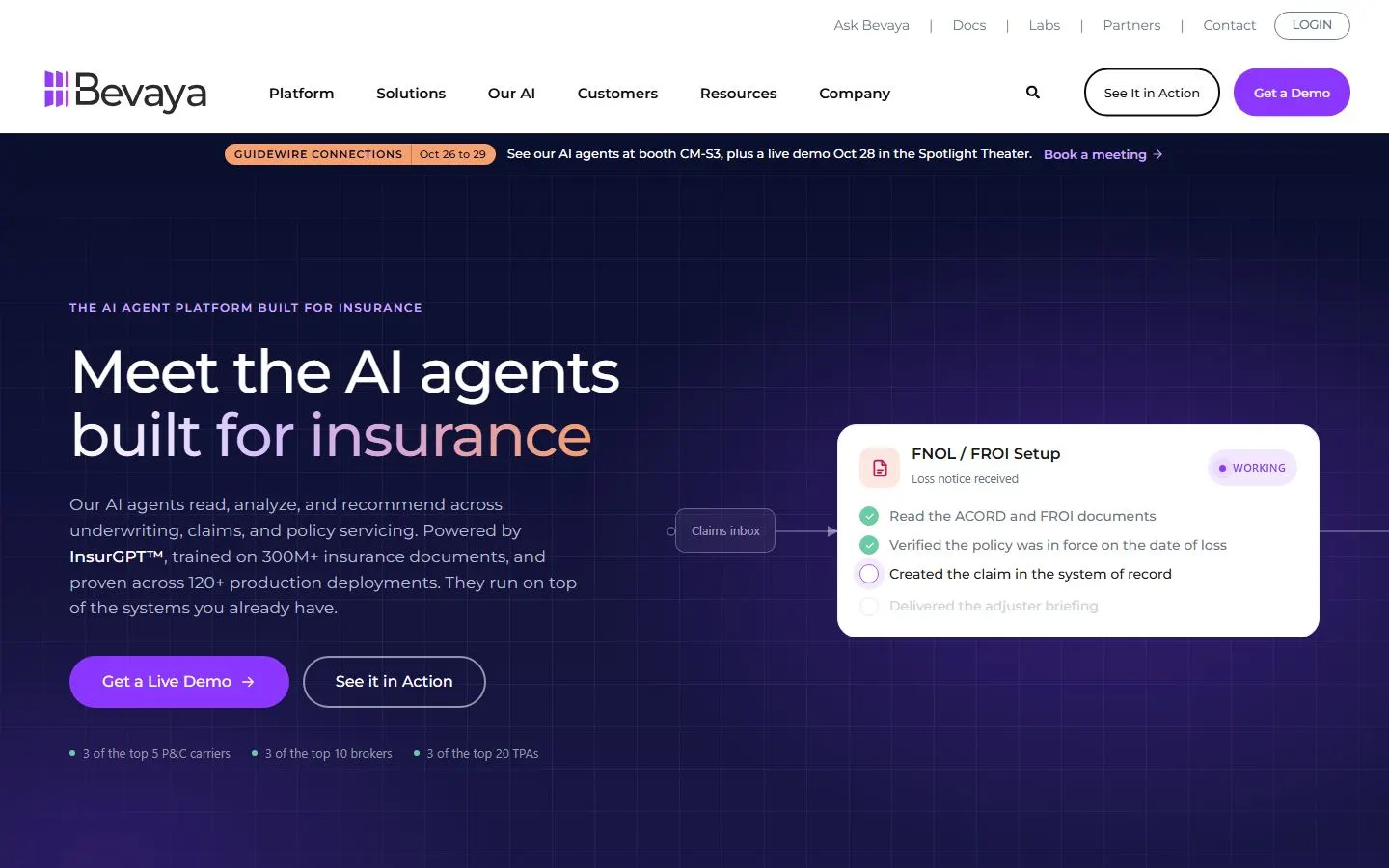
Best for: Carriers and MGAs that want SOVs and property schedules normalized automatically as part of intake.
Roots (now Bevaya) says it “reads Statement of Values spreadsheets and property schedules in any format, normalizes the data, and delivers clean structured exposure data.” (source)
Key functionalities
- SOV and schedule extraction with normalization
- Intake and renewal workflow automation
- Push to underwriting systems
Pros:
- Says it reads SOV spreadsheets and property schedules in any format and normalizes the data
- Part of a wider intake and renewal workflow
Cons:
- More than you need for extraction alone
- Pricing by quote
Pricing: Not published for SOV extraction; agent pricing by quote.
Verdict: A fit for teams that want SOV normalization handled inside automated intake.
How do these tools compare side by side?
| Tool | Approach | Best for | Pricing | Security |
|---|---|---|---|---|
| 1Indico Data | Enterprise IDP | Large carriers and London Market participants processing high volumes of diverse document types across multiple languages and lines of business | Quote only | SOC 2 unverified |
| 2SortSpoke | Insurance workflow automation | E&S and specialty carriers processing non-standard submission packages who need underwriter-configurable extraction without developer dependency | Quote only | SOC 2 Type II |
| 3Roots Automation | Insurance workflow automation | Carriers and MGAs wanting AI workers that handle complete insurance workflows including submission intake, policy checking, and bordereaux management | Quote only | SOC 2 Type II |
Which tool fits your team?
- High SOV volume inside a large submission intake program: Indico Data.
- Underwriters want to validate every location: SortSpoke.
- You want SOVs normalized automatically within agent-driven intake: Roots.
Conclusion: plan the mapping step
Extraction gets values out of the spreadsheet; mapping makes them usable. Before you choose a tool, define the schema and codes your rating and cat models need, and test each vendor on whether it can deliver data in that shape.
FAQs
What is the best software for extracting statements of values?
Indico Data is the strongest fit for large carriers ingesting SOVs at volume; SortSpoke fits specialty underwriting teams that want human-validated extraction; Roots reads SOVs and property schedules inside agent-driven intake. All three quote pricing by sales.
Why are SOVs hard to automate?
Each broker formats SOVs differently: columns are renamed or reordered, values sit in merged cells, locations span multiple tabs, and construction or occupancy is described in free text rather than codes. Extraction has to map all of that to a consistent schema.
What fields should SOV extraction capture?
At minimum: location address, building, contents and business-interruption values, construction type, occupancy, year built, number of stories, square footage, and protection details such as sprinklers. Many carriers also want geocodes and secondary modifiers for catastrophe modeling.
Can document extraction tools prepare SOV data for catastrophe models?
They can extract and normalize the data, but cat models need specific coding schemes. Plan a mapping step from extracted values to your model's construction and occupancy codes, and review unmapped values.