Best Claims Management Software for Insurers in 2026
Seven claims management tools compared: Guidewire ClaimCenter, Duck Creek Claims, Sapiens ClaimsMaster, Five Sigma, Snapsheet, Origami Risk and Hi Marley, by approach, lines of business, deployment, pricing and who each fits.
TL;DR
- Claims management software falls into four shapes: core claims systems (Guidewire, Duck Creek, Sapiens), AI-native claims platforms (Five Sigma), workflow-and-payments platforms (Snapsheet), risk-management platforms (Origami Risk), and a communication layer (Hi Marley).
- Guidewire ClaimCenter leads for P&C carriers that want claims in the same suite as policy and billing; Duck Creek Claims is the cloud-native SaaS alternative.
- Five Sigma's Clive AI adjuster can run on top of an existing claims system, so it can be an add-on rather than a replacement.
- Snapsheet is strongest where auto physical damage volume is high; Origami Risk suits TPAs, risk pools and corporate risk teams.
- Hi Marley handles claimant communication, not the claim file itself, so it pairs with a core claims system rather than replacing one. No vendor here publishes pricing.







Claims is where an insurer keeps its promise, and where its software tends to be oldest. Buyers looking for “claims management software” find core systems that hold the claim file, AI layers that sit on top of them, appraisal and payment platforms, and communication tools, all described with the same words. Pricing is quoted by sales, and each vendor’s marketing leads with outcomes that are hard to compare.
This guide compares seven tools that carriers, MGAs and TPAs shortlist. It starts with how they differ, covers each one, and ends with a side-by-side table and a guide to which fits which team. Details come from each vendor’s own site, and vendor claims are attributed as such.
Different tools solve different parts of the problem
Some of these tools replace your claims system and some work beside it. Grouping them by shape makes that clear.
| Shape | What it focuses on | Tools in this list |
|---|---|---|
| Core claims system | The claim file, reserves, payments and workflow inside a policy, claims and billing suite | Guidewire, Duck Creek, Sapiens |
| AI-native claims platform | AI-driven handling, either as a platform or as an AI adjuster over an existing system | Five Sigma |
| Workflow, appraisal and payments | No-code workflow, virtual appraisal and digital payouts | Snapsheet |
| Risk management and claims administration | Claims alongside risk management, for TPAs, risk pools and corporate risk teams | Origami Risk |
| Communication layer | Claimant and adjuster messaging and conversational FNOL | Hi Marley |
Core systems suit carriers modernizing their whole stack. AI platforms suit teams that want faster handling without replacing the core. Workflow and payment platforms suit auto-heavy books, risk-management platforms suit TPAs and self-insured programs, and communication tools fit any team whose bottleneck is phone tag.
The 7 best claims management tools for insurers
1. Guidewire: Best for P&C carriers that want claims in the same suite as policy and billing
 Quote onlyFull profile →
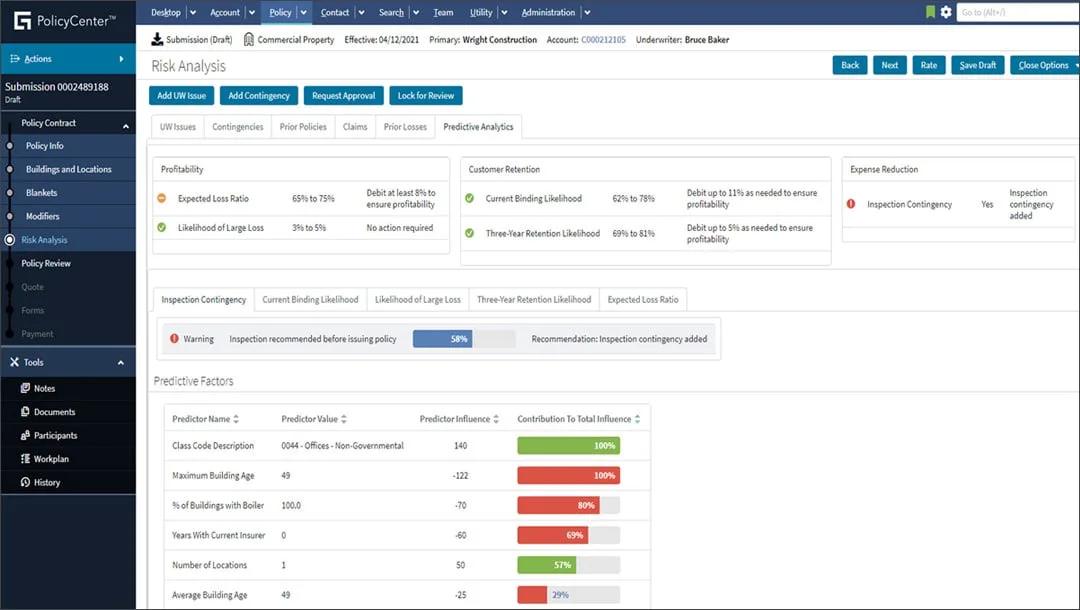
Best for: Mid-size and large P&C carriers that want ClaimCenter alongside PolicyCenter and BillingCenter and can fund a partner-led implementation.
Guidewire sells ClaimCenter as claims management software within InsuranceSuite. The company says it delivers its platform as a cloud service and that InsuranceSuite supports P&C insurers across all lines of business when the applications are used together.
Key functionalities
- ClaimCenter claims management, alongside PolicyCenter and BillingCenter
- Guidewire Cloud delivery
- Guidewire Marketplace partner apps
- Analytics and data products offered alongside the core
- Solutions pages for workers’ compensation, excess and surplus, and London Market
Pros:
- Claims, policy and billing from one vendor
- Large partner ecosystem; Guidewire says it has 175+ marketplace apps
- Says it serves more than 300 P&C customers
Cons:
- Pricing is not published
- Implementations are large, partner-led projects
Pricing: Not published; quoted by sales.
Verdict: The broadest strong fit for P&C carriers replacing a claims core. MGAs and smaller carriers should compare lighter options first.
2. Duck Creek: Best for cloud-native SaaS claims with configurable workflow
 Quote onlyFull profile →
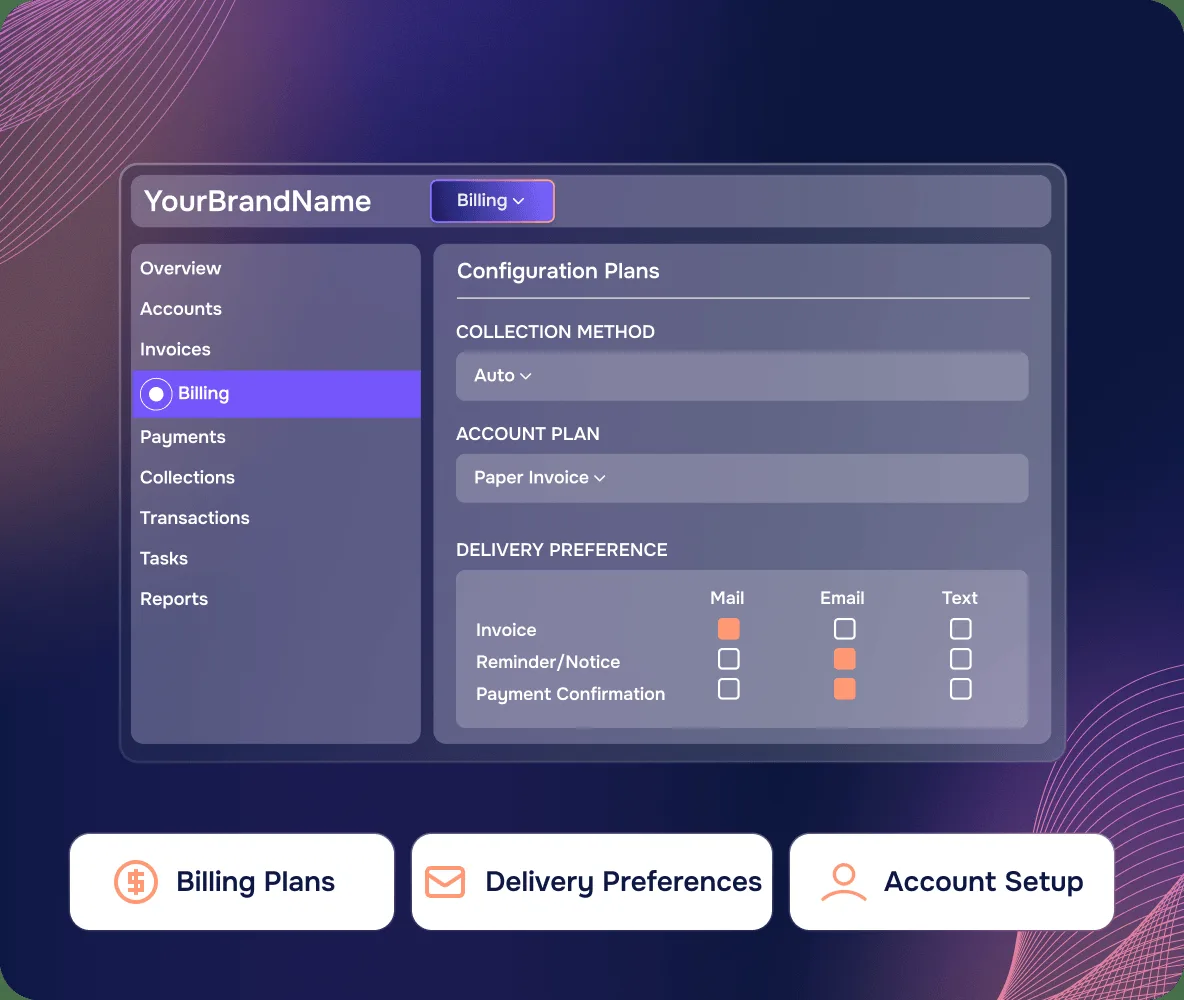
Best for: P&C carriers and MGAs that want a vendor-managed SaaS claims system, especially for workers' compensation, pet and auto.
Duck Creek Claims is the claims module of Duck Creek’s platform. The company says it reduces leakage and cycle times, and reports 30 million-plus claims processed via Duck Creek OnDemand and 60,000-plus claims a day during a catastrophe event. These are vendor figures.
Key functionalities
- Business-led workflow configuration
- Agentic First Notice of Loss with conversational intake
- Workers’ compensation: FNOL, medical review and return-to-work handling
- Pet: high-volume intake and claims handling
- 2,600+ APIs and 100+ partner integrations, per Duck Creek
Pros:
- Cloud-native SaaS with vendor-managed releases
- Says assignment or rule changes can be made in under a day
- Agentic First Notice of Loss application with conversational intake, per the company
Cons:
- Pricing is not published
- Claims-specific detail is thin outside workers' compensation and pet on its claims page
Pricing: Not published; quoted by sales.
Verdict: A strong SaaS alternative to ClaimCenter. Test configuration on your own claim types.
3. Sapiens: Best for insurers outside the US needing P&C claims with life products
 Quote onlyFull profile →

Best for: Insurers, especially in EMEA and APAC, that want P&C claims from the same vendor as policy and possibly life.
Sapiens offers ClaimsMaster, which a 2024 Celent citation on its site describes as comprehensive, flexible and highly automated P&C claims management. It sits alongside IDITSuite for policy administration.
Key functionalities
- ClaimsMaster for P&C claims management
- IDITSuite for P&C policy administration
- DigitalSuite and DataSuite
- Decision management
- SapiensAIP, described as an autonomous insurance platform
Pros:
- ClaimsMaster for P&C claims, with Celent Luminary recognition cited by Sapiens
- Policy (IDITSuite) and life (CoreSuite) products from the same vendor
- Reinsurance and decision management also offered
Cons:
- Pricing is not published
- Deployment models are not described on its main site
Pricing: Not published; quoted by sales.
Verdict: A good fit for international and multi-line insurers. US carriers should check local references.
4. Five Sigma: Best for AI-driven claims handling over an existing system
 Quote onlyFull profile →
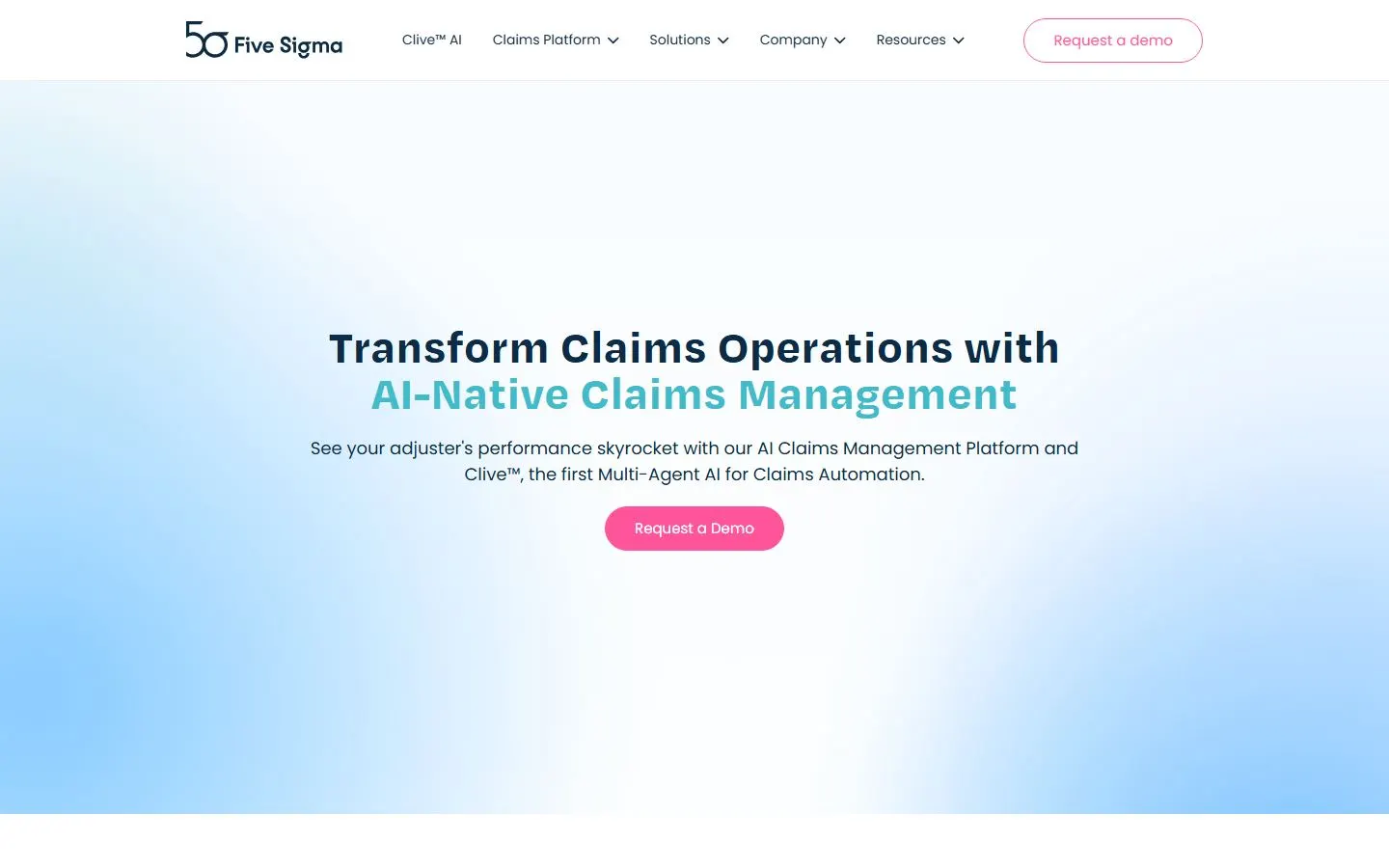
Best for: Carriers, MGAs and TPAs that want AI to triage, route and handle claims, either on a new platform or on top of their current claims system.
Five Sigma sells an AI-native claims management platform and Clive, a multi-agent AI adjuster. Starr announced in January 2026 that it selected the platform for its digital claims transformation. The company lists auto, homeowners, workers’ compensation, pet, cyber, general liability and specialty lines.
Key functionalities
- Claims management platform with workflow automation
- Clive AI adjuster for triage, data entry, reserve and vendor recommendations, and routing, per Five Sigma
- Management dashboards
- API and plug-and-play integrations
- Works over existing claims systems or standalone
Pros:
- Clive can run on Five Sigma's platform or on top of an existing claims system
- Press coverage reports integrations with Guidewire, Duck Creek, Sapiens and Majesco
- Cloud SaaS; implementation described as months, not years
Cons:
- Pricing is not published
- Newer vendor (founded 2017), so shorter track record than core suite incumbents
Pricing: Not published; quoted by sales.
Verdict: A good option for adding AI to claims without a core replacement. Ask for results from claims like yours; outcome figures in public coverage are promotional.
5. Snapsheet: Best for high-volume auto claims, appraisal and payments
 Quote onlyFull profile →
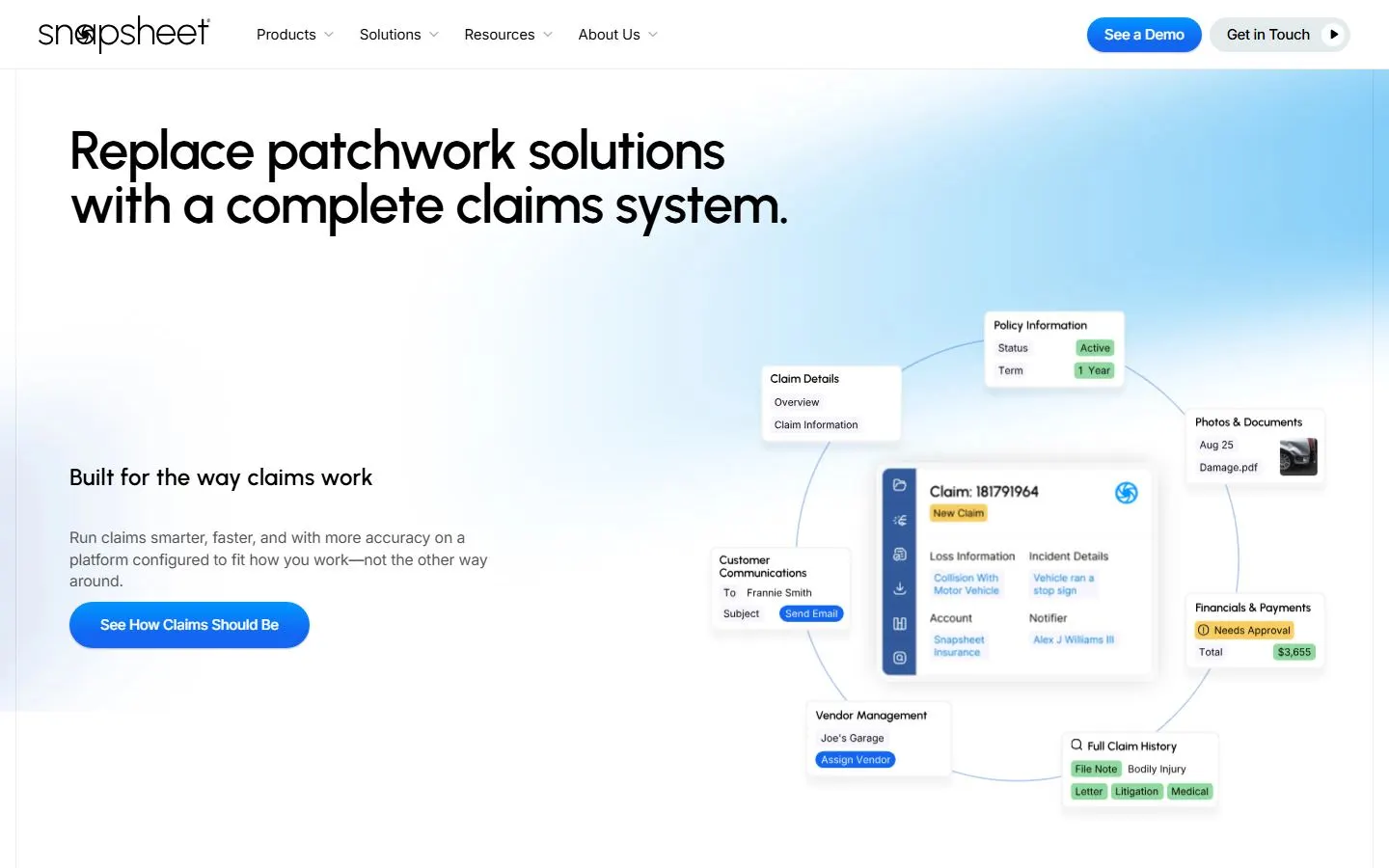
Best for: Carriers processing high volumes of auto physical damage claims that want no-code workflow, virtual appraisals and digital payments in one platform.
Snapsheet offers a claims platform with a single claim view, built-in accuracy checks and adjuster task alerts. Its site says it is trusted by 170-plus customers, including 16 of the top 20 P&C carriers, though another section of the same page cites 70-plus companies, so treat the count with caution.
Key functionalities
- Unified claims platform with single claim view
- No-code workflows and rules
- Virtual vehicle appraisals
- Total loss settlement
- Digital payments and API integrations
Pros:
- No-code workflows for claim types, rule sets and lines of business
- Virtual appraisals across private passenger, marine, RV, motorcycles and trucks
- Digital payments triggered by payment conditions
Cons:
- Pricing is not published
- Strongest in auto physical damage; confirm fit for complex commercial or specialty claims
Pricing: Not published; quoted by sales.
Verdict: A practical choice for auto-heavy books. Test commercial and specialty workflows before committing.
6. Origami Risk: Best for TPAs, risk pools and corporate risk teams
 Quote onlyFull profile →
Best for: TPAs, risk pools and corporate risk managers that want claims administration with risk management on one platform.
Origami Risk covers P&C policy administration, billing and claims administration, as well as risk management information system functions such as exposure management and total cost of risk analytics. Customers named on its site include Harford Mutual, Mission Underwriters and Washington Schools Risk Management Pool.
Key functionalities
- Claims administration
- Exposure management and insurance program management
- Reporting and analytics
- Origami Mobile and Origami Risk AI
- Policy administration and billing modules
Pros:
- Claims administration alongside RMIS, EHS and GRC modules
- Lists carriers, MGAs, risk pools and TPAs as insurance segments
- Described as a cloud-native platform
Cons:
- Pricing is not published
- Broader risk platform, so less specialized than dedicated high-volume personal lines claims engines
Pricing: Not published; quoted by sales.
Verdict: A fit for administrators and self-insured programs. Large personal lines carriers should compare core claims systems.
7. Hi Marley: Best for claimant communication alongside a core claims system
 Quote onlyFull profile →

Best for: P&C carriers whose claims bottleneck is adjuster and claimant communication, and who already have a claims system of record.
Hi Marley describes itself as the communication fabric for P&C insurance. It sits next to a claims system, moving messages, photos and intake into text-based conversations.
Key functionalities
- Conversational FNOL
- Workflow Assist and Total Loss Assist
- Claims Inquiry Assist
- Conversation archiving
- Integration with claims systems (confirm your platform with the vendor)
Pros:
- Coordinates communication among employees, policyholders and service providers in one platform
- Products include Conversational FNOL, Workflow Assist, Total Loss Assist and Claims Inquiry Assist
- Captures communication as a record
Cons:
- Not a claims system of record; it needs a core claims platform
- Pricing is not published
Pricing: Not published; quoted by sales.
Verdict: A targeted add-on, not a replacement for a core system. Verify the integration with your claims platform.
How do these tools compare side by side?
| Tool | Approach | Best for | Pricing | Free trial | Security | Deployment | Lines of business |
|---|---|---|---|---|---|---|---|
| 1Guidewire | Enterprise P&C core suite | Mid-size and large P&C carriers replacing a legacy core system and willing to fund a multi-year, partner-led implementation. | Quote only | — | SOC 2 unverified | Delivered as a cloud service (per Guidewire) | P&C, all lines |
| 2Duck Creek | Cloud-native P&C core suite | P&C carriers and MGAs that want a SaaS core platform with policy and claims from one vendor. | Quote only | — | SOC 2 unverified | Cloud-native SaaS | P&C, workers' comp, pet, specialty |
| 3Sapiens | Multi-line core suites | Insurers outside the US core-system mainstream, particularly in EMEA and APAC, that need P&C and life from one vendor. | Quote only | — | SOC 2 unverified | Not stated on main site | P&C, life and pensions |
| 4Five Sigma | AI-native claims platform | Carriers, MGAs and TPAs that want AI-driven claims handling, either as a new system or on top of an existing one. | Quote only | — | SOC 2 unverified | Cloud SaaS | Auto, home, workers' comp, pet, cyber, specialty |
| 5Snapsheet | Claims Management | P&C carriers processing high volumes of auto physical damage claims who want to automate FNOL triage, virtual appraisal, and payment disbursement in a single platform | Quote only | — | SOC 2 unverified | Not stated on main site | Auto physical damage focus |
| 6Origami Risk | Risk management and claims platform | TPAs, risk pools and corporate risk teams that want claims administration and risk management on one platform. | Quote only | — | SOC 2 unverified | Cloud-native platform | P&C, workers' comp, self-insured |
| 7Hi Marley | Claims Management | P&C carriers handling high-frequency personal lines claims (auto, homeowners) who want to reduce adjuster phone time and improve claimant response rates | Quote only | — | SOC 2 unverified | Not stated on main site | P&C |
Which tool fits your team?
- You are a P&C carrier replacing a claims core, ideally with policy and billing: Guidewire, or Duck Creek as the SaaS alternative.
- You are an international or multi-line insurer: Sapiens.
- You want AI handling without replacing your claims system: Five Sigma.
- Your book is high-volume auto physical damage: Snapsheet.
- You are a TPA, risk pool or self-insured program: Origami Risk or Five Sigma.
- Your bottleneck is adjuster and claimant communication: Hi Marley alongside your core system.
Conclusion: decide first whether you are replacing the core or adding a layer
The most useful first decision is scope: a core replacement is a multi-year program, while a layer can often be added to what you run today. Shortlist two or three tools, run a sample of your own historical claims through each, and get written pricing for your volume and integrations before you negotiate.
FAQs
What is the best claims management software for insurers?
It depends on whether you need a core claims system or a layer on top. Guidewire ClaimCenter and Duck Creek Claims are core systems for P&C carriers. Five Sigma adds AI-driven handling and can run over an existing system. Snapsheet fits high-volume auto physical damage, and Origami Risk fits TPAs and risk pools.
What is the difference between claims management software and a claims system of record?
A claims system of record holds the claim file, reserves, payments and coverage verification. Other tools add a layer: communication (Hi Marley), AI handling (Five Sigma's Clive), or appraisal and payments (Snapsheet). Check whether a tool replaces the system of record or sits next to it.
How much does claims management software cost?
None of the seven vendors publishes pricing. Contracts are quoted by sales and usually include a subscription or license plus implementation and integration work. Ask each vendor to price your claim volume and the integrations you need.
Which claims software works for TPAs?
Origami Risk lists TPAs among its insurance segments, Five Sigma says it serves TPAs as well as carriers, MGAs and reinsurers, and Duck Creek and Guidewire sell mainly to carriers. TPAs should check multi-client configuration and reporting for each client.
Can AI claims software run on top of Guidewire or Duck Creek?
Five Sigma says Clive can run on top of existing claims systems, and press coverage reports integrations with Guidewire, Duck Creek, Sapiens and Majesco. Hi Marley also positions itself as a communication layer that works alongside claims systems. Confirm the specific integration and what data flows both ways.
Which claims platforms are cloud SaaS?
Duck Creek describes a cloud-native SaaS platform, Five Sigma describes a cloud-based SaaS platform, and Origami Risk describes a cloud-native platform. Guidewire says it delivers its platform as a cloud service. Hosting and upgrade terms should be confirmed in the contract.
Do claims systems handle first notice of loss?
Yes, most include FNOL intake. Snapsheet lists FNOL with multimedia support, Duck Creek lists an agentic First Notice of Loss application, and Hi Marley lists Conversational FNOL. How well each handles your claim types needs to be tested on your own files.
How should a carrier evaluate claims management software?
Run a sample of your own historical claims, by line of business, through each shortlisted tool. Compare configuration effort, integration with your policy and payment systems, adjuster workflow and reporting, and ask for references with similar claim volume.