Best Insurance Fraud Detection Software in 2026
Six insurance fraud detection tools compared: Shift Technology, FRISS, Verisk ClaimSearch, SAS Detection and Investigation, Sprout.ai and Carpe Data, by approach, fit, pricing and security.
TL;DR
- Insurance fraud tools fall into four shapes: AI fraud and claims platforms (Shift Technology, FRISS), industry claims data (Verisk ClaimSearch), build-your-own analytics (SAS), and external-data or claims-automation tools (Carpe Data, Sprout.ai).
- Shift Technology leads for mid-to-large carriers that want a dedicated fraud platform; the company says it works with 120+ customers in more than 30 countries.
- FRISS scores trust at both quote and claim and includes SIU case management; the company says it works with insurers and MGAs in more than 45 countries.
- Verisk ClaimSearch is a data source rather than a scoring platform. The company says its database has more than 1,850 contributors, and several platforms plug into it.
- None of the six publishes pricing. Vendor performance figures, such as false-positive reductions, are self-reported and should be tested on your own claims.






Insurance fraud ranges from padded repair bills to organized rings, and it shows up at the quote as well as at the claim. Fraud tools differ in where they sit: some score every claim at intake, some supply cross-carrier data, some give investigators a case workspace, and some are analytics toolkits that your own team builds on. Buyers find it hard to compare them because most vendors publish performance figures without methodology and none publishes pricing.
This guide compares six tools insurance teams shortlist. It covers how they differ, each tool, a side-by-side table and which fits which team.
Different tools solve different parts of the fraud problem
| Shape | What it focuses on | Tools in this list |
|---|---|---|
| AI fraud and claims platform | Scoring, network detection and investigator workflow on your own claims | Shift Technology, FRISS |
| Industry claims data | Cross-carrier claim history and scoring on a shared database | Verisk ClaimSearch |
| Build-your-own analytics | Configurable modeling, text mining and link analysis run by your data team | SAS Detection and Investigation |
| External data and SIU tooling | Online and public-data signals, investigative reports and case management | Carpe Data |
| Claims automation with fraud flags | Straight-through claims processing with anomaly detection | Sprout.ai |
Platforms suit carriers that want a vendor-built model and investigator workflow. A data source suits teams that need loss history to check against. Analytics toolkits suit organizations with data scientists. External-data tools add signals to an existing process, and claims automation suits teams whose first goal is speed on routine claims.
The 6 best insurance fraud detection tools for carriers
1. Shift Technology: Best for a dedicated AI fraud platform at mid-size to large carriers
 Quote onlyFull profile →
Best for: Mid-size and large carriers with high claim volumes in auto, property or workers compensation that need fraud detection beyond manual SIU triage.
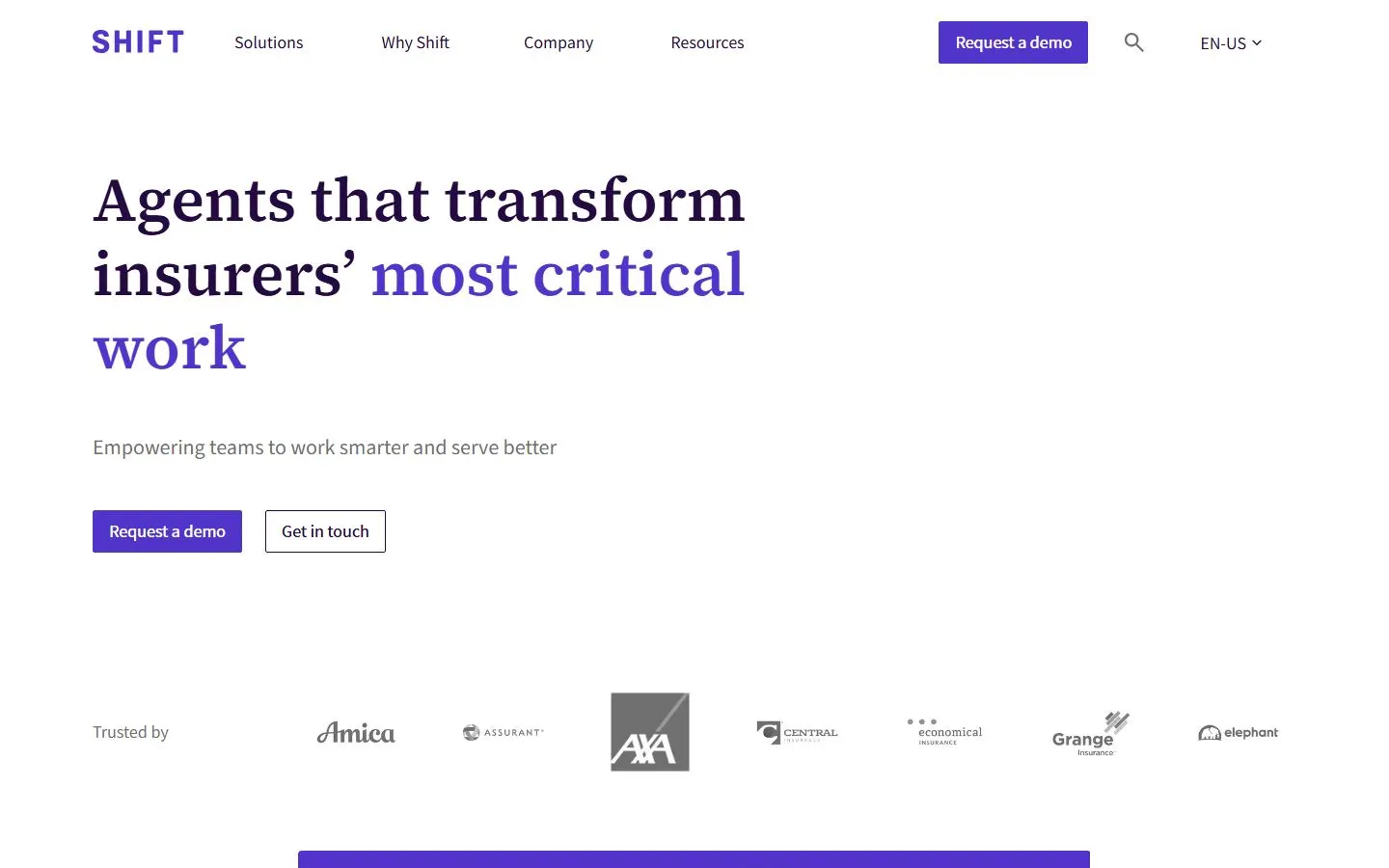
Shift Technology says it builds AI agents for insurers, with solutions for coverage and liability, fraud and risk, subrogation, claims and injury. Its site says all of the top five US P&C insurers use it (source).
Key functionalities
- Fraud and risk agents that the company says assess for fraud, assign cases and guide investigations
- Network analysis linking related claims and parties
- Coverage and liability, subrogation and claims solutions on the same vendor
- Security page showing HITRUST, ISO 27701 and AICPA badges, with GDPR described as by design (source)
Pros:
- Company says 120+ customers in more than 30 countries and 4B+ policies, claims and documents analyzed
- Fraud and risk sits alongside coverage, subrogation and claims solutions
- Network analysis aims at organized fraud, not only single-claim anomalies
Cons:
- Needs enough claims history to calibrate to your book
- Integration with older core systems may need middleware
- Pricing not published; public security page does not name SOC 2
Pricing: Not published; quoted by sales.
Verdict: The most complete dedicated option for carriers with the volume to justify it. Small carriers will likely find it more than they need.
2. FRISS: Best for scoring trust at both quote and claim
 Quote onlyFull profile →
Best for: Mid-size to large carriers, often multi-country, that want one platform across underwriting and claims fraud with SIU workflow.
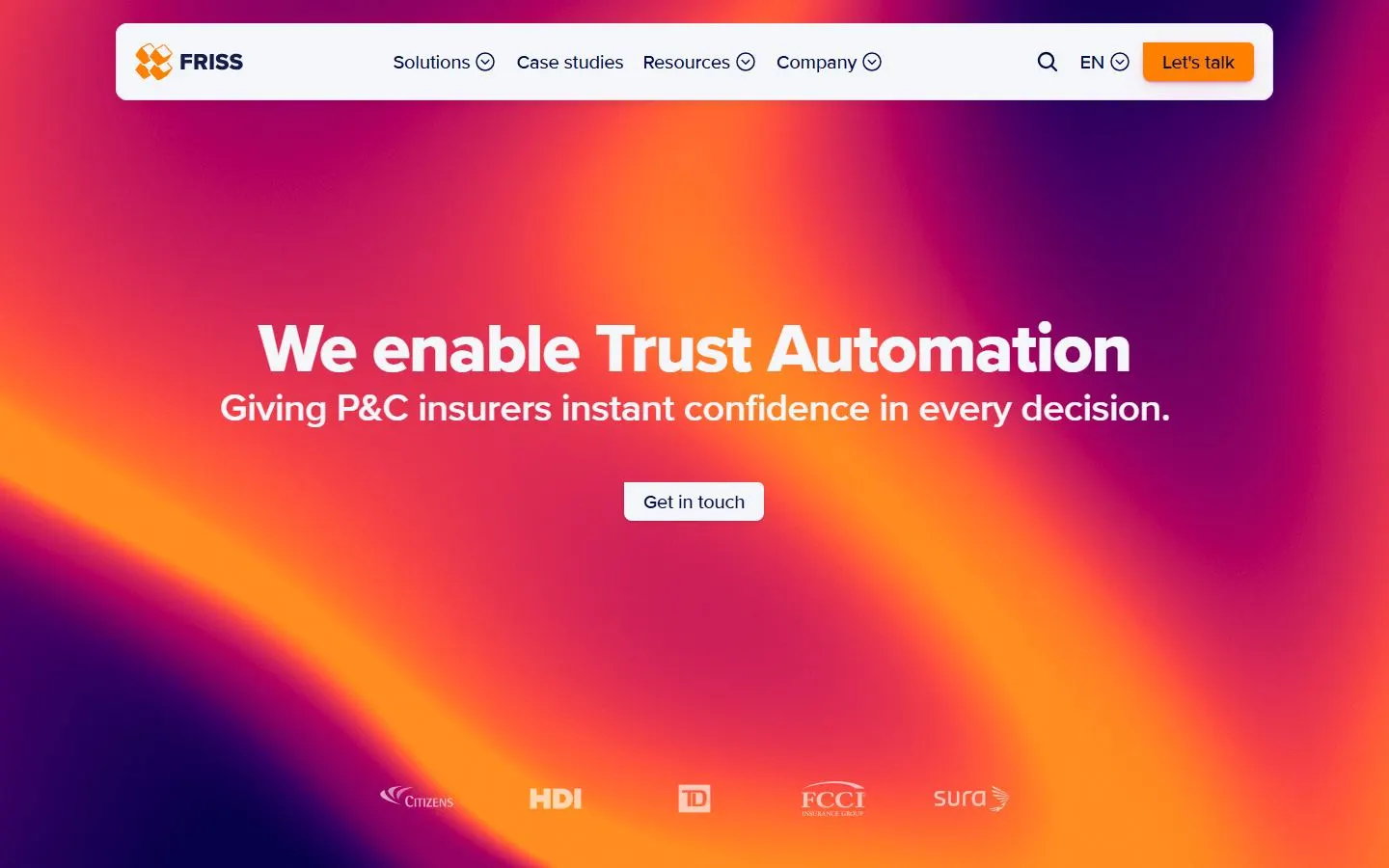
FRISS calls its approach Trust Automation. Its site lists Claims Analytics, Underwriting Analytics, Investigations, KYC and Compliance, and Media Check, and says it was founded in 2006 and works with insurers and MGAs in more than 45 countries (source).
Key functionalities
- Claims analytics that score the trustworthiness of each claim at intake
- Underwriting analytics that score applications at the quote
- Investigations workspace for SIU fact-building on flagged claims
- KYC and compliance screening for sanctions, PEP and adverse media
- Media Check for news and social media red flags
Pros:
- One platform scores applications and claims
- Includes SIU investigation workflow, KYC and compliance screening and media checks
- Integrations with Guidewire, Duck Creek and Sapiens, per its FAQ
Cons:
- Performance claims on its site, such as 75% fewer false positives, have no stated methodology
- Global focus; North American carriers should validate local fraud patterns
- Pricing not published; no certification stated on the main page
Pricing: Not published; quoted by sales.
Verdict: A good fit for carriers that want underwriting and claims fraud on one score. Validate its results on your own historical claims.
3. Verisk ClaimSearch: Best for cross-carrier claim history in the US
 Quote onlyFull profile →
Best for: US P&C carriers and SIU teams that want industry loss history and early claim scoring as a baseline.
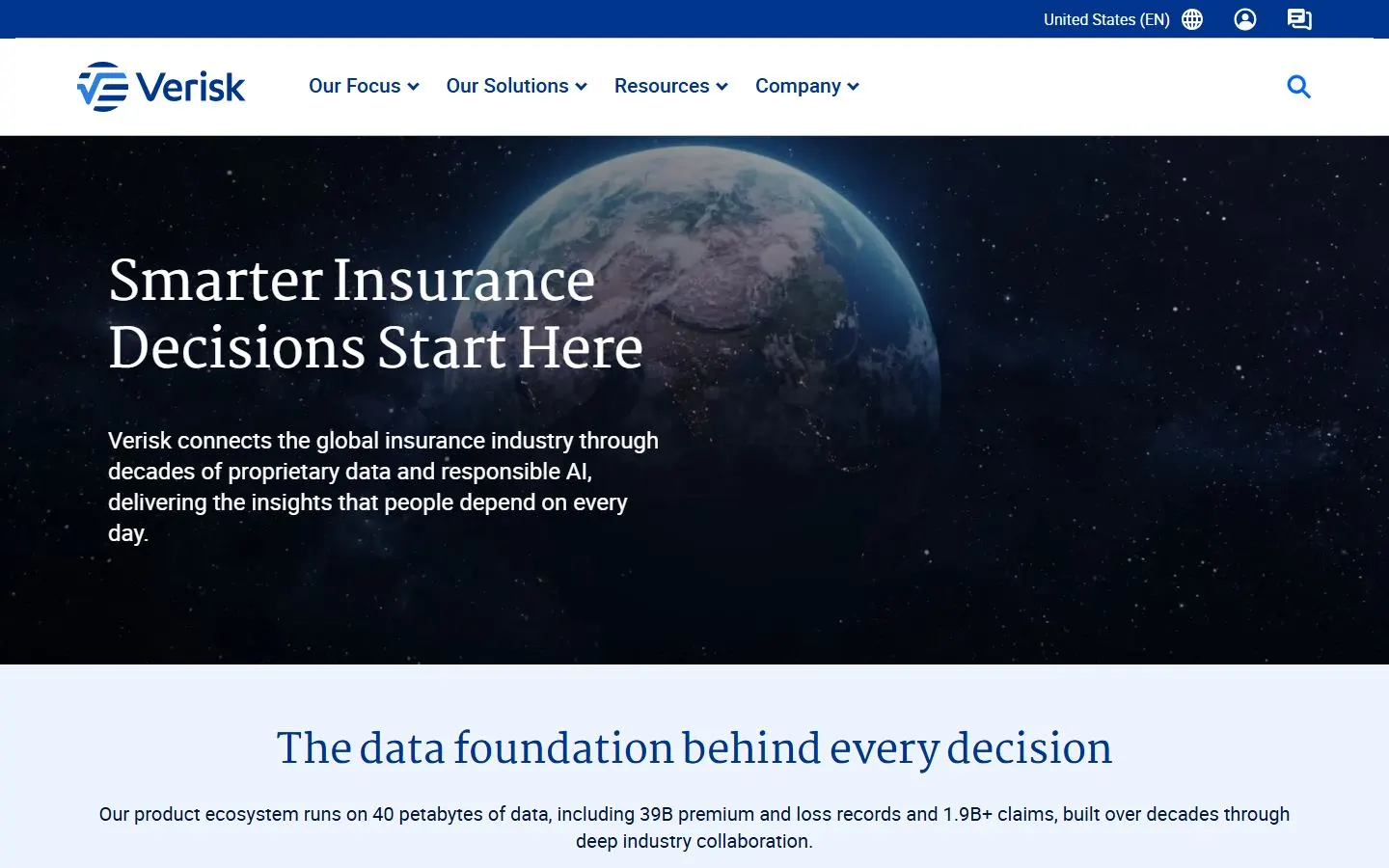
Verisk ClaimSearch is a claims database that insurers contribute to and query. Verisk’s materials describe fraud detection and investigation tools on top of it, and a photo database used to find duplicate or suspicious images (source).
Key functionalities
- Claims history search across contributing insurers
- Claim scoring that returns an early fraud risk score
- Digital media forensics database for duplicate or suspicious images
- Ecosystem integrations announced with FRISS, Globlue and Carpe Data
Pros:
- Contributory database; Verisk says it has more than 1,850 contributors including the top 100 P&C insurers
- Claim scoring gives an early fraud risk score, according to a trade article
- Other platforms such as FRISS and Carpe Data integrate with it
Cons:
- A data source, not a full case-management or investigator workflow
- US-centered
- Pricing not published
Pricing: Not published; quoted by sales.
Verdict: Hard to skip for US carriers, and it pairs with a scoring platform rather than replacing one.
4. SAS Detection and Investigation for Insurance: Best for teams that want to build and tune their own models
 Quote onlyFull profile →
Best for: Large carriers and government fraud units with data science staff that want a configurable analytics and investigation suite.
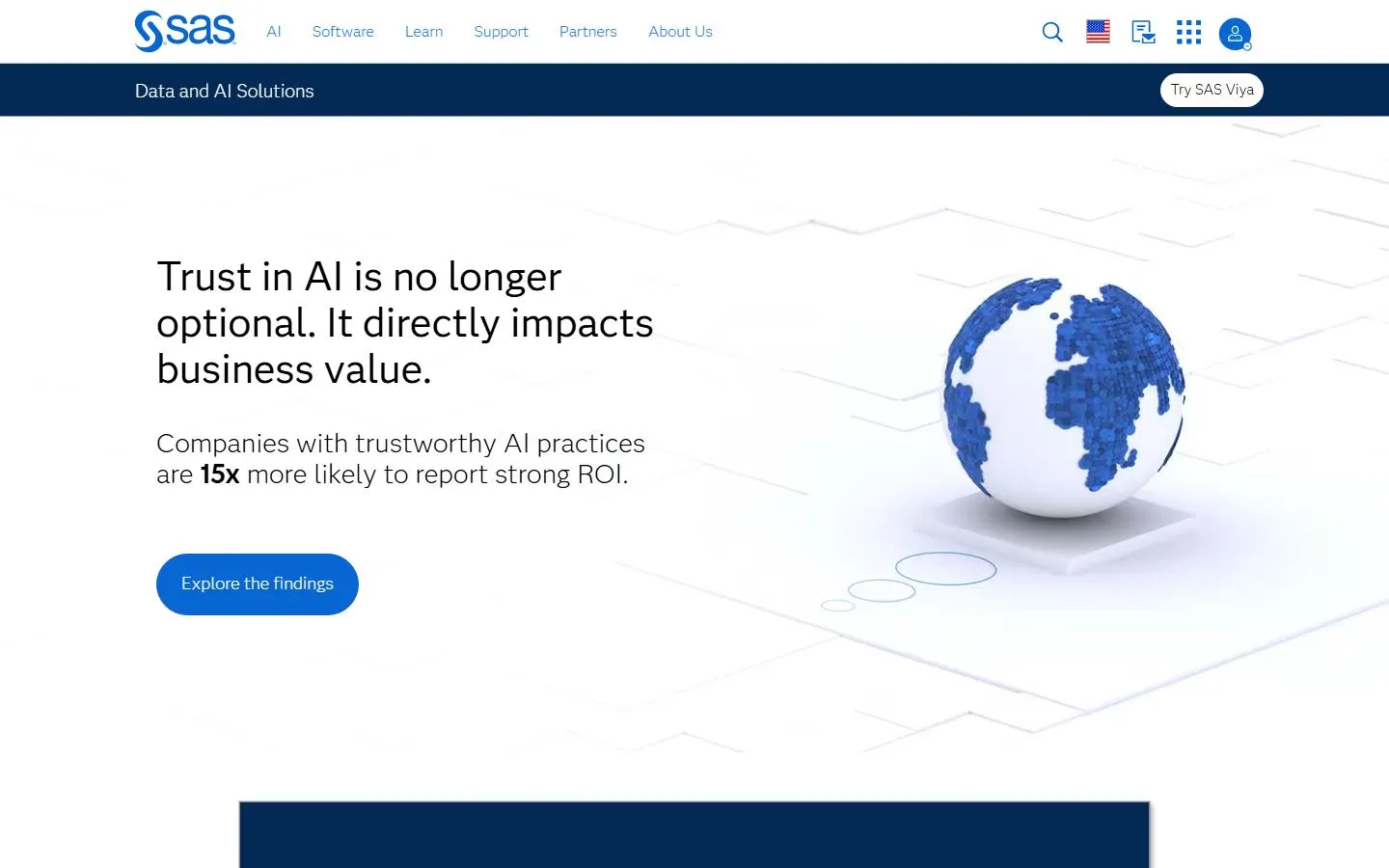
SAS Detection and Investigation for Insurance is SAS’s fraud and investigation suite. SAS says its industry solutions use layered defenses including predictive modeling, text mining and network link analysis to identify fraud before claims are paid (source).
Key functionalities
- Predictive modeling for fraud risk scoring
- Network link analysis to find hidden relationships between claim participants
- Text mining of claim notes and documents
- Investigation case tracking, as used by the North Carolina Department of Insurance (source)
Pros:
- Layered approach: predictive modeling, text mining and network link analysis, per SAS
- Public customer stories include DB Insurance in Korea and the North Carolina Department of Insurance
- Runs on SAS Viya, which many analytics teams already use
Cons:
- Needs in-house analytics skill and implementation time
- Not an insurance-only product
- Pricing not published
Pricing: Not published; quoted by sales.
Verdict: A fit for organizations that want control over models and already staff data scientists. Others will find a prebuilt platform faster to deploy.
5. Sprout.ai: Best for claims automation with fraud flags in health, motor and property
 Quote onlyFull profile →
Best for: Insurers and MGAs, particularly in Europe and the Lloyd's market, that want straight-through claims processing with anomaly detection.
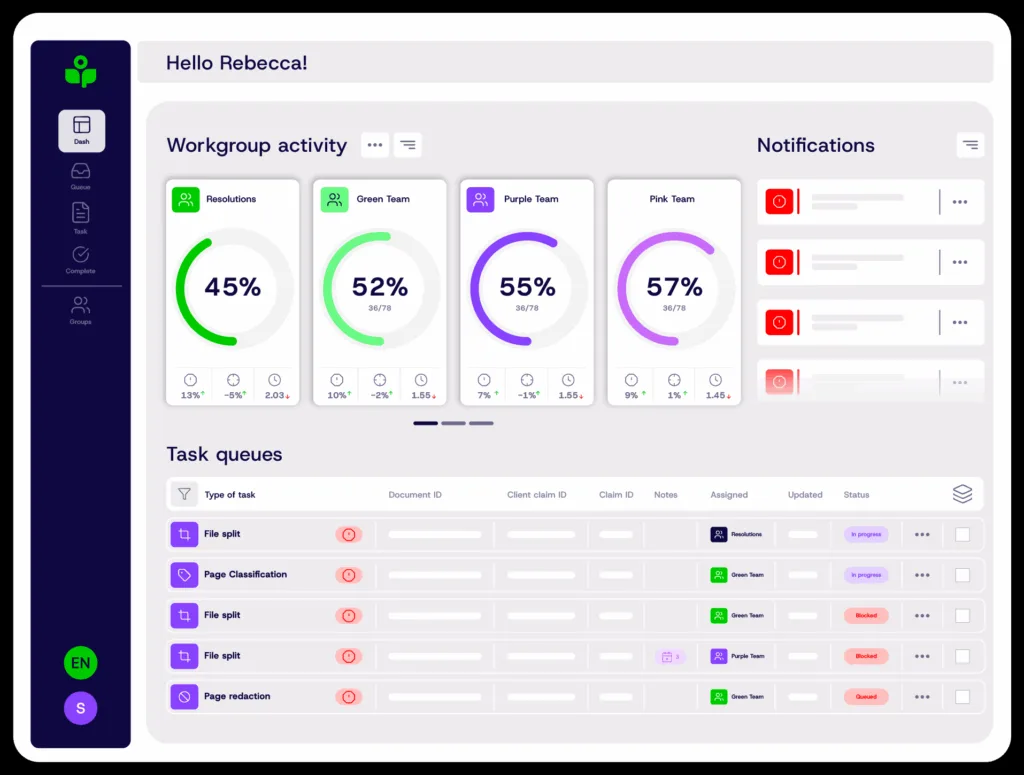
Sprout.ai describes a purpose-built AI layer for claims processing. Its site says the platform can detect, explain and prevent fraud, identify anomalies and unusual patterns, and for motor claims flag fraudulent activity in real time (source).
Key functionalities
- AI layer for claims processing across health, life, motor, property and commercial
- Anomaly and pattern detection with explanations
- Document extraction and policy validation
- ISO 27001 certification listed on the vendor site
Pros:
- ISO 27001 certification listed on its site
- Spans health, life, motor, property and commercial lines
- Fraud flags sit inside the claims automation flow
Cons:
- Fraud detection is part of a claims automation product, not a dedicated investigator platform
- Smaller vendor; North American references may be limited
- Pricing not published
Pricing: Not published; quoted by sales.
Verdict: Choose it when claims speed is the primary goal and fraud flags are a secondary need. Carriers whose main problem is fraud should shortlist Shift or FRISS first.
6. Carpe Data: Best for adding online and external-data signals to SIU work
 Quote onlyFull profile →
Best for: Claims and SIU teams that want external-data alerts and investigative reports, especially on injury and litigation-heavy lines.
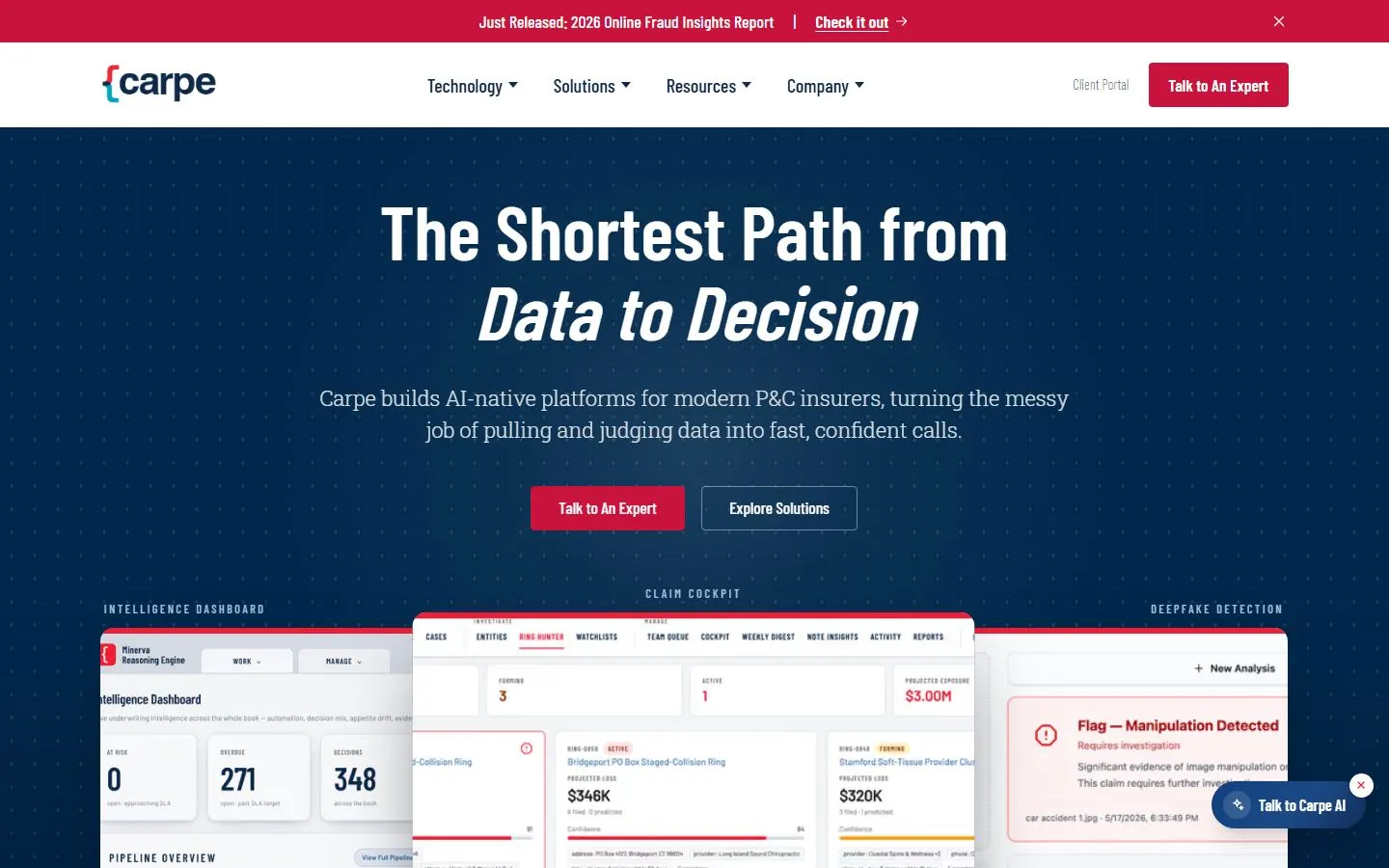
Carpe Data builds claims products on external data. Its site lists Online Injury Alerts for lifecycle monitoring, Investigative Reports, an SIU case management product and Carpe Vision for image and document forensics (source).
Key functionalities
- Online Injury Alerts that monitor open claims for fraud signals
- Investigative Reports built for evidence-heavy files
- AI case management for SIU
- ClaimsX Ultra for early fraud detection, according to trade press (source)
Pros:
- Products include Online Injury Alerts, Investigative Reports and an SIU case management product
- Joined Verisk's ClaimSearch ecosystem, according to trade press
- Also sells image and document forensics
Cons:
- Adds signals to a fraud process rather than replacing a scoring platform
- No security certification found in sources used for this guide
- Pricing not published
Pricing: Not published; quoted by sales.
Verdict: A useful add-on for SIU teams with injury-heavy books. Pair it with a core scoring tool.
How do these tools compare side by side?
| Tool | Approach | Best for | Pricing | Free trial | Security |
|---|---|---|---|---|---|
| 1Shift Technology | Insurance AI | Mid-to-large carriers running high claim volumes in auto, property, or workers compensation who need fraud detection beyond manual SIU triage | Quote only | — | SOC 2 unverified |
| 2FRISS | Fraud Detection | Mid-to-large carriers operating across multiple countries who want unified fraud detection spanning underwriting and claims, with built-in SIU workflow | Quote only | — | SOC 2 unverified |
| 3Verisk ClaimSearch | Industry claims database | US P&C carriers and SIU teams that want cross-carrier claim history as a baseline fraud check. | Quote only | — | SOC 2 unverified |
| 4SAS Detection and Investigation for Insurance | Analytics platform | Large carriers and government insurance fraud units with data science teams that want to build and tune their own detection models. | Quote only | — | SOC 2 unverified |
| 5Sprout.ai | Claims Automation | European carriers and Lloyd's syndicates processing high volumes of low-complexity health, motor, and travel claims who want to maximize straight-through settlement rates | Quote only | — | SOC 2 unverified |
| 6Carpe Data | Alternative data and SIU tooling | Claims and SIU teams that want online and public-data signals added to their fraud process, especially on injury and litigation-prone lines. | Quote only | — | SOC 2 unverified |
Which tool fits your team?
- You want a dedicated AI fraud platform and have high claim volume: Shift Technology.
- You want one score across quote and claim, with SIU workflow: FRISS.
- You are a US carrier and want industry loss history: Verisk ClaimSearch, paired with a scoring tool.
- You have data scientists and want to build your own models: SAS.
- Your priority is claims speed with fraud flags, especially in Europe: Sprout.ai.
- You want external-data signals on injury claims: Carpe Data.
Conclusion: pick the layer you are missing
Fraud programs usually need a data source, a scoring layer and an investigator workspace. Work out which one you lack, then ask two or three vendors to run your historical claims, including confirmed fraud cases, and compare the hit rates and false positives yourself.
FAQs
What is the best insurance fraud detection software?
It depends on what you need. Shift Technology and FRISS fit carriers that want a dedicated AI fraud platform with investigation workflow. Verisk ClaimSearch fits US carriers that want cross-carrier claim history. SAS fits organizations with data science teams that want to build their own models. Carpe Data adds external-data signals, and Sprout.ai fits claims automation with fraud flags.
How does AI detect insurance fraud?
Most tools score each claim or application for fraud risk, look for links between people, providers and vehicles, and send high-risk files to investigators. SAS describes combining predictive modeling, text mining and network link analysis. The scoring models are trained on claims history, so results depend on your data.
What is Verisk ClaimSearch?
ClaimSearch is a contributory claims database run by Verisk. Verisk says it has more than 1,850 contributors, including the top 100 P&C insurers. Carriers use it to check loss history, and Verisk offers claim scoring on top of it.
Do these tools cover underwriting fraud as well as claims fraud?
FRISS scores both applications at quote and claims at intake. Shift lists fraud and risk, claims, coverage and subrogation solutions. Verisk ClaimSearch, Carpe Data and Sprout.ai are centered on claims.
How much does insurance fraud detection software cost?
None of the six vendors publishes pricing. Enterprise fraud platforms are typically quoted by claim volume and modules, so expect a sales process and a proof of concept.
Can small insurers or MGAs use fraud detection software?
Enterprise platforms need enough claims history to calibrate models and usually API integration. Small carriers often start with a data source such as ClaimSearch or a point tool, and larger platforms suit higher claim volume.
Will these tools reduce false positives?
Vendors say so. FRISS, for example, claims 75% fewer false positives on its site. That is a self-reported figure with no stated methodology on the page, so ask for results from comparable carriers and test on your own historical claims.
Are these tools SOC 2 certified?
Public pages are mixed. Sprout.ai lists ISO 27001 on its site. Shift's security page shows HITRUST and ISO 27701 badges and describes GDPR-by-design, but does not name SOC 2. FRISS's main page does not mention a certification. Request current reports from each vendor.